
Every hero needs a team.
Group therapy gives you something individual therapy can’t: a team. A league. A safe place to land when you’re worn out from carrying too much solo. Group work can be one of the most powerful and unexpectedly transformative experiences in therapy, especially when you’ve spent much of your life feeling like the odd one out.
This isn’t about spilling your secrets to strangers. It’s about connection. It’s about showing up and realizing you’re not the only one who feels anxious in social situations, who second-guesses their boundaries, who struggles with burnout, identity, or belonging. It’s about sitting with a group of people who just get it, and practicing new ways of relating in real time.
In my Austin-based practice, we gather in person at my north-central office, and in some cases, virtually from wherever you are in Texas.

Current Groups
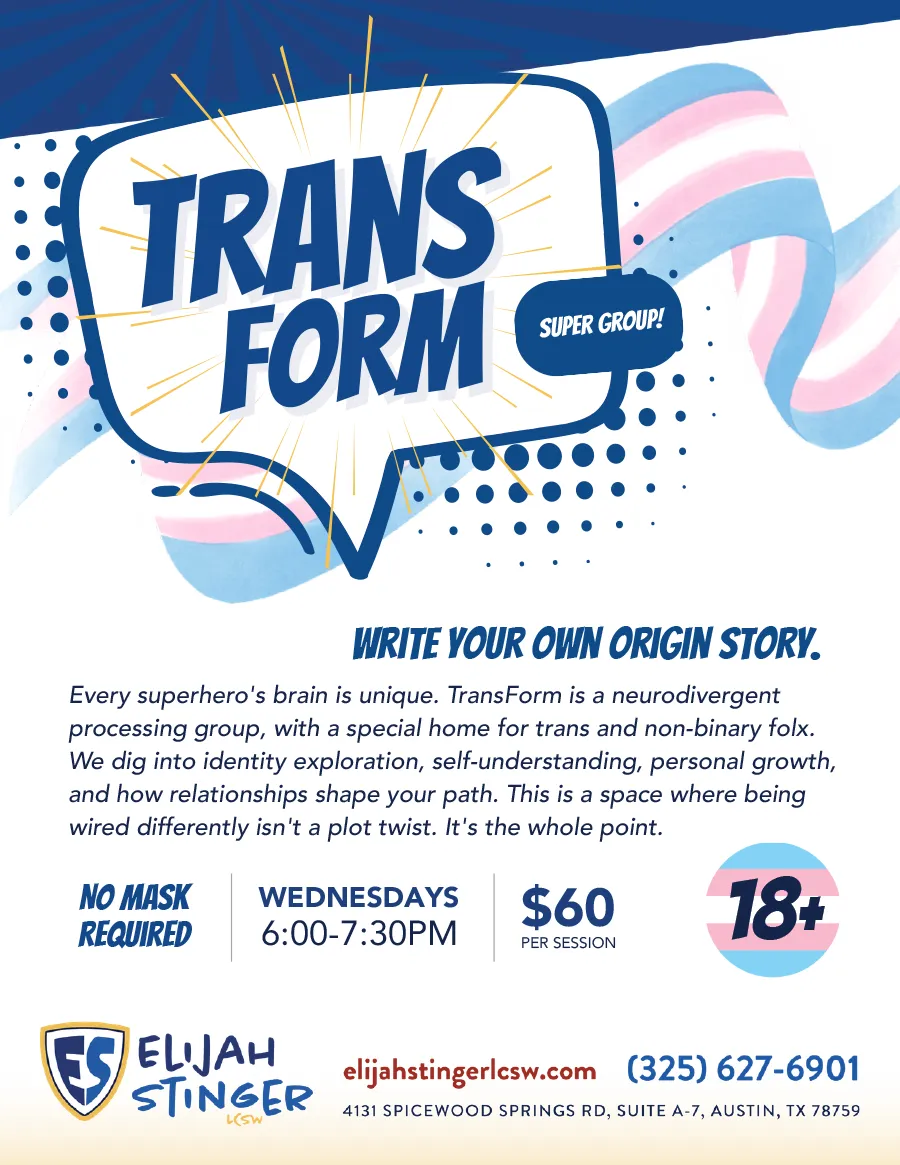

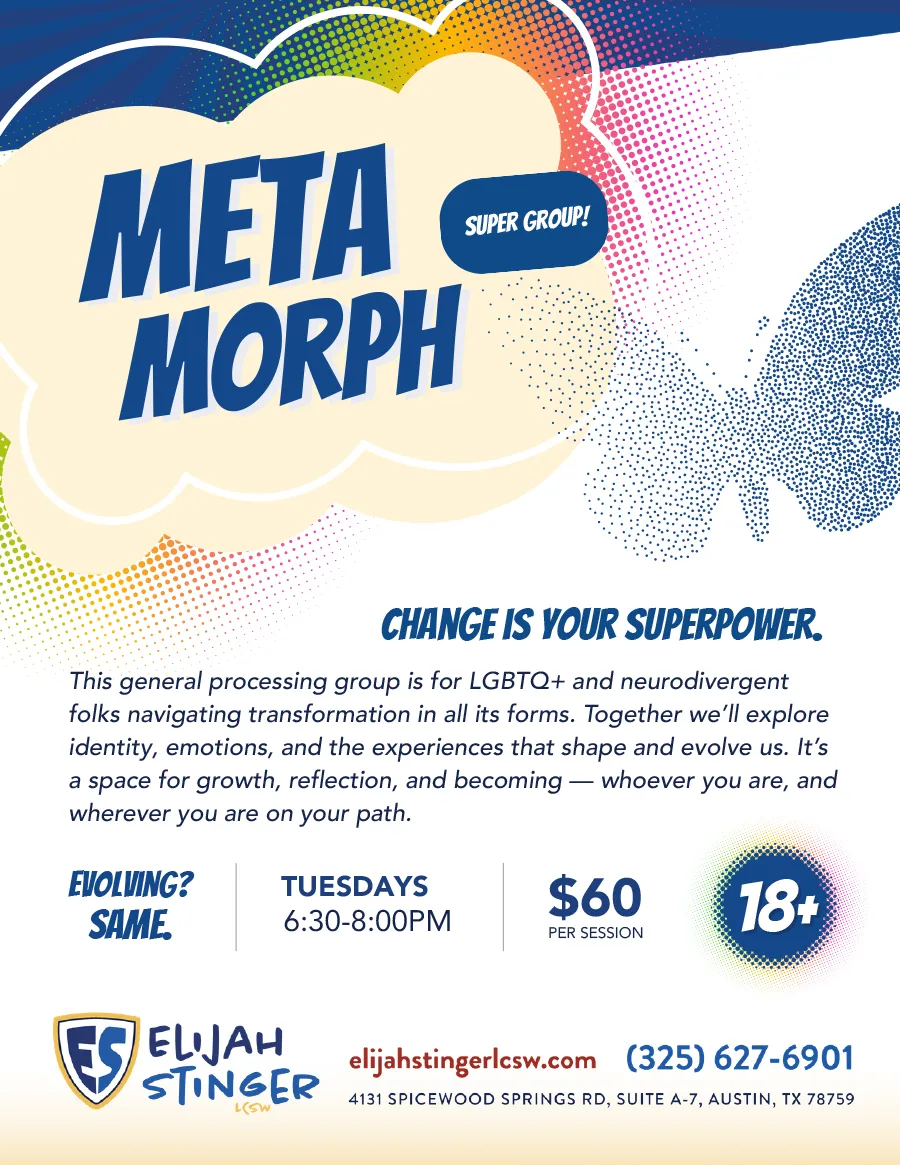
Why group therapy?
For many of us, healing doesn’t happen in isolation. Group therapy creates a space where community, courage, and shared humanity come together. It’s a place to be witnessed, to offer and receive support, and to learn from others who are also doing the hard work of showing up authentically.
There’s structure and intention in every group I run. We explore themes like identity, self-trust, social connection, boundaries, and emotional regulation.
Whether you’re neurodivergent, LGBTQ+, or simply someone who feels like you’ve always been on the edge of things, group therapy can help you find your people and yourself.
What makes my groups different?
I draw from my roots in theater and improvisation to create an environment that is engaging, creative, and dynamic. We might use metaphor, roleplay, or themed prompts to explore deeper emotional material. That doesn’t mean it’s a performance. It just means we allow space for expression, for play, and for multiple ways of communicating.
Some groups are open-ended, while others run for a set number of weeks with a clear focus. All are affirming, collaborative, and designed to feel safer than the average group setting. I bring humor, warmth, and structure, while encouraging each group to shape itself through the unique mix of voices in the room.
This is not group therapy as you might remember it from TV. There are no fluorescent lights and folding chairs. Just a cozy room in Austin, a circle of fellow travelers, and the understanding that being real is more powerful than being perfect.
Is group therapy right for me?
You don’t have to be outgoing, talkative, or even comfortable in groups to benefit from group therapy. It’s okay to be nervous. This is a space where you can grow at your own pace and connect with others in a way that feels genuine.
Group therapy is especially helpful if you:
- Struggle with social anxiety or loneliness
- Want to build confidence in relationships
- Are working on boundaries and communication
- Feel isolated in your identity or lived experience
- Need a space where you don’t have to explain everything
- Want support in real time from people who get it
Whether you’ve tried group therapy before or are brand new to it, I’m happy to talk through what to expect and whether there’s a group that fits your needs. Some groups accommodate virtual attendance, especially for folks across Texas who can’t commute to Austin.
Whether you’ve tried group therapy before or are brand new to it, I’m happy to talk through what to expect and whether there’s a group that fits your needs. Some groups accommodate virtual attendance, especially for folks across Texas who can’t commute to Austin.